
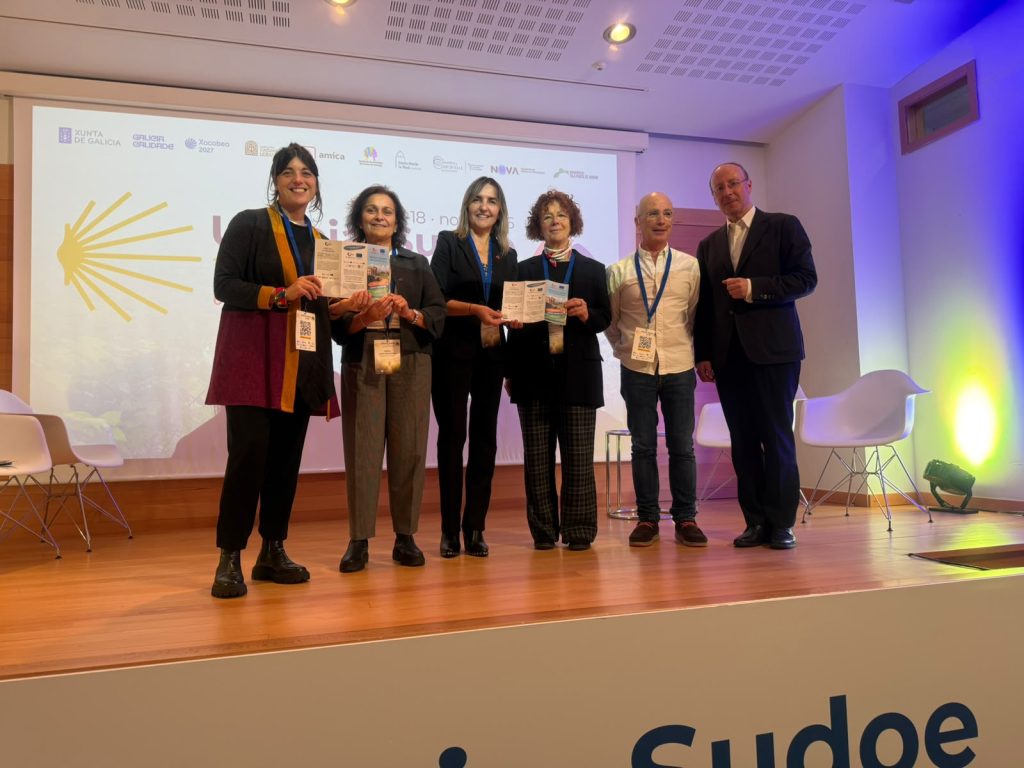
On 17-18 November 2026, HIKE4ALL was presented at the Ultreia–Sudoe International Symposium as an example of good practice developed through cooperation between the Via Francigena and the Camino de Santiago. Hosted by the Museo das Peregrinacións in Santiago de Compostela, the symposium focused on the transnational management of the Ways of St James across Spain, France and Portugal, in the framework of the Interreg project Ultreia-Sudoe. Simona Spinola, Head of Communications at the European Association of the Via Francigena Ways shared the project’s objectives and results, drawing on the experience of organising inclusive walks. Representatives of the project partner Camino Lebaniego Fundation and the Spanish organisations AMICA and DisCamino illustrated what accessibility means at each stage of a pilgrimage, showing the HIKE4ALL event held in Spain last September as a good practice. Before setting out, walkers need clear information about the route, the facilities available and transport to the starting point. On the trail, surface conditions such as loose stones and mud can affect whether a section is passable. At the end of the stage, accessibility also depends on practical details such as whether people can enter their accommodation, use the bathroom, get a meal and find suitable transport for the journey home. These examples offered a practical lesson for route managers. A stage is accessible when walkers can plan it, reach it, walk it and use the services they need along the way and at the end of the day. Delivering that experience requires cooperation between route managers, local authorities, transport and accommodation providers, and people with disabilities and their representative organisations.
[Photo credits: AEVF]