
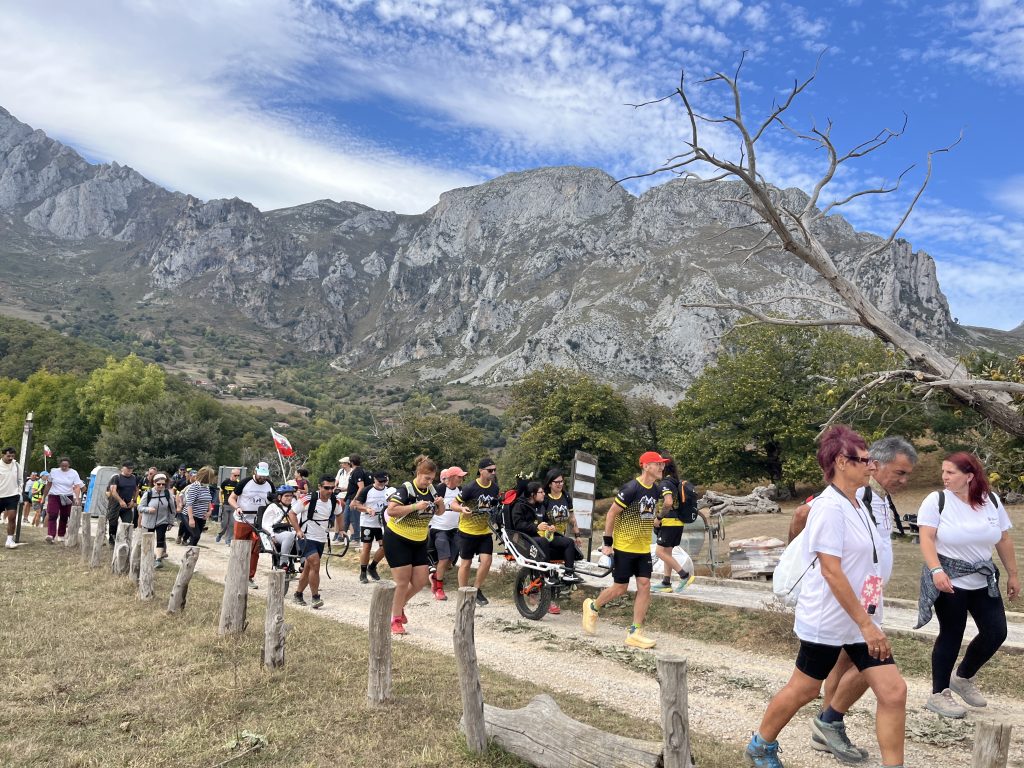
On 25–26 September 2026, the HIKE4ALL project resumed its programme after the summer break with a two-day event in Cantabria, northern Spain, dedicated to accessibility, inclusion and equal opportunities along hiking and pilgrimage routes. Organised in the framework of the European Week of Sport, the event brought together local organisations, institutions and international HIKE4ALL partners along the Camino Lebaniego, one of the six European Cultural Routes involved in the project.
A participatory workshop on accessibility and inclusion
The programme opened at the Auditorium of San Vicente de la Barquera with a workshop introduced by ; Pilar Gomez Bahamonde, Director of the Fundación Camino Lebaniego. The starting question was essential: how can we make a walking route truly inclusive and accessible to everyone, regardless of age, physical ability, personal condition or background? Participants were invited to reflect together on key concepts related to universal accessibility, including discrimination, personal autonomy, inclusion, equal opportunities, language and barriers. Through a participatory activity, ideas and experiences were collected and shared, providing the basis for discussion among local associations, institutions and experts. The workshop continued with an exchange on initiatives and good practices already being implemented in the territories crossed by the Camino Lebaniego, with contributions from organisations working directly on accessibility and inclusion, local stakeholders, the Guardia Civil and outdoor activity experts. The HIKE4ALL consortium was represented by Simona Spinola from the European Association of the Via Francigena ways (AEVF), coordinator of the project, and from Guro Vistad, Tor Sorby and Trond Egil Svandal, from Norway, representing St Olav’s Ways Association. Their participation provided an opportunity to exchange experiences between different European walking and pilgrimage routes and to discuss common challenges in making outdoor experiences accessible to a wider and more diverse public.
Inclusion on the trail
On 26 September, the discussion moved from the workshop to the trail itself with an inclusive hike of approximately 10 kilometres along the Camino Lebaniego. Before setting off, participants took part in a series of participatory activities and workshops on local flora and fauna organised by Steps for Life, creating an opportunity to discover the natural environment of the area in an interactive and accessible way. More than 100 people took part in the event, which also involved four associations — Zancadas sobre Ruedas, Arrastrasillas, Amica and Cumbres alalba — whose volunteers supported participants with reduced mobility by accompanying and transporting the Joëlettes along the route. Local media were also present, providing coverage through television, newspapers and radio. Open to participants with different abilities and backgrounds, the walk crossed the Cantabrian landscape and included some of the area’s cultural and natural landmarks, including the Monastery of Santo Toribio de Liébana and Habario de Pendes. The activity offered participants an opportunity to experience directly how accessibility is connected not only to the physical characteristics of a route, but also to information, organisation, support, communication and the ability to create an environment in which everyone can participate. The Spanish event marked the restart of the HIKE4ALL format after Italy, Norway and the Czech Republic, and it involved national organisations such as Camina Cantabria, Gobierno de Cantabria, Ayuntamiento de Potes, Santa María la Real, Xunta de Galicia, Xacobeo, NOVA, Município de Vila Pouca de Aguiar and Chemins de Compostelle.
[Photo credits: FCL]